
El ROI MINISTRIES
Providing primary health care to marginalised groups
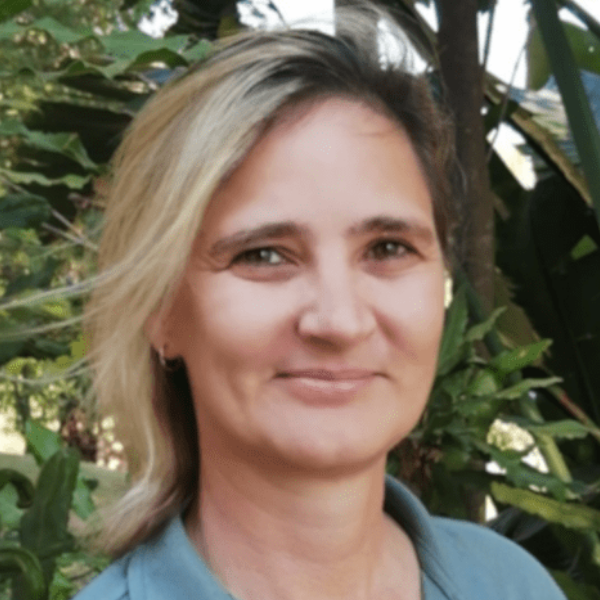
JACQUI SMITH
Jacqui was born and raised in Johannesburg, South Africa. In the early 1990s she attended Africa School of Missions (ASM) in White River where she trained as a nurse. Jacqui then served in Mozambique as a medical missionary from 1995 working as a nurse and midwife at a mission for orphaned children.
PROJECT PROFILE


PROJECT HISTORY
The need for this ministry was because undocumented individuals could get no medical help from government clinics due to their unregistered status, and could not afford private clinics. The need was so great that very soon Jacqui was swamped with cases, so she gathered a group like-minded ladies to serve as volunteers.
It soon became apparent that they would need a premises to operate from, and in 2016 a motorcycle club from New York in the US, who were touring South Africa offered to purchase a timber frame building, 10 metres by 10 metres, and a small church in Msholozi offered to host the clinic on their property at no charge.
The timber frame building was duly set up on the church property and the consultation and treatment of patients continued apace, with the number of patients being seen, and the number of volunteers growing week by week.
THE MOVE TO AGAPE AND ONWARDS
In mid 2018 El Roi was offered the use of a very suitable suite of rooms on the campus of Agape Christian Church, in the centre of Msholozi. This church has its headquarters in Seoul, South Korea. The clinic started running from Agape from October 2018.
The Agape facility was eminently useable for clinic purposes, and the ministry ran efficiently and happily until March 2020 when they were asked to close down due to the Covid lockdown.
Jacqui and her team decided they would carry on running from another site. During lockdown, and up until June 2023, through the kindness of Pastor Thomas, the clinic operated from three small rooms and a couple of gazebos on the premises of Holy Living Church, in a remote corner of Msholozi. During this time the clinic reached a peak of one hundred and thirty-seven patients served in one day.


A PERMANENT HOME
During 2019 funds were donated for the purpose of purchasing a piece of land on which to build a permanent home for the clinic. The land was duly acquired and plans were made to commence building in 2020. However, Covid intervened and building only started in September 2022.
By June 2023 the building was sufficiently complete to allow occupation. The basic structure of the clinic consists of three steel shipping containers, two of which have been converted for clinic use, with wiring, plumbing, insulation, airconditioning, windows and doors. The third container is awaiting funds for conversion. Around the containers is a brick and mortar structure, encompassing toilets, washrooms and a small kitchen and dining room for staff, and a roof.
In the weeks before occupation, Agape Church offered to finance the drilling of a borehole, and the donation of all the ancillary equipment. This was gratefully accepted and the work began immediately. Water was struck at forty-five metres, and the whole project was completed within days. The borehole is a huge benefit, as there is no piped water within the ghetto.
PROJECT OBJECTIVES
The El Roi Clinic aims to provide primary health services within the Msholozi ghetto to anyone in need who does not qualify for help from the government clinics. The patient demographic is the aged, young mothers with young children, and orphans, all from the poorest and most side-lined members of society.
The services include pre-natal, post-natal, contraceptives, coaching young mothers in feeding and caring for their infants, dietary training for infants, children, and adults to ensure sustainable nourishment with limited finances, treatment of injuries and diseases, and dispensing of medicines. The clinic facilitates transport to a hospital in cases requiring serious medical intervention, such as surgery.
In the recent past, the clinic has treated cases of Bilharzia, Leprosy, AIDS, Covid, Pneumonia, injuries due to accident, and collapse due to severe malnutrition.
PROJECT NEEDS


The clinic is entirely donor funded. All the volunteer nurses work without any remuneration. The cost per week of running the clinic is SA Rand 20000, or £860, or $1050. This covers electricity, medicines, medical supplies, and food, and fuel.
Currently, (year end 2023) SA R77 000/£3400/$4100 is needed to complete payment to the building contractor.
R175 000 is needed to cover the conversion of the third container, and R60 000/£2600/$3200 is needed to pave the area around the building.


YEARS IN COUNTRY
WEEKLY PATIENTS
TOTAL PEOPLE HELPED
Your contribution today, will go along way tomorrow – deeply impacting the lives of thousands.